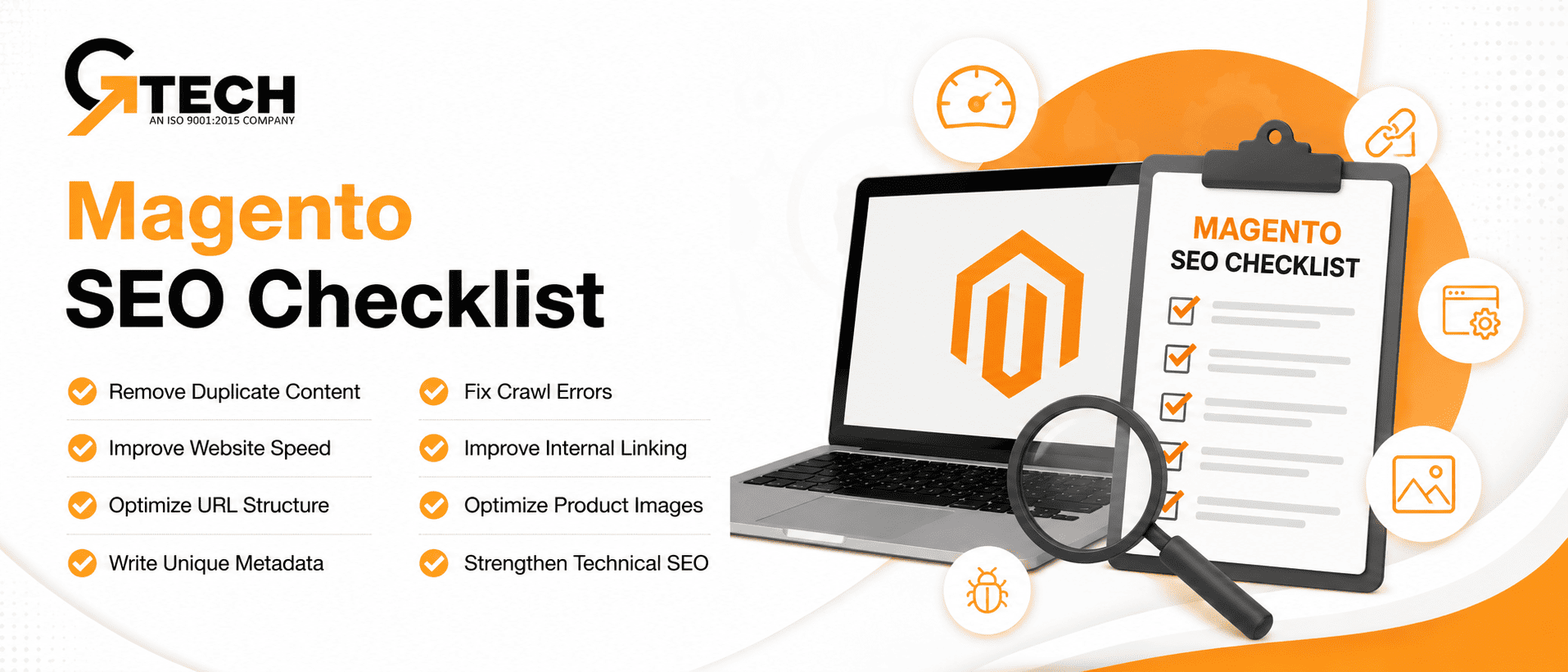
Magento is a solid platform for running an online store. It gives businesses the flexibility to build something substantial, but having a well-built store and having a store that ranks well in search are two very different things. Without the right SEO groundwork in place, even a technically impressive Magento store can sit invisible in search results while competitors with simpler sites take the traffic.
The frustrating part is that most of the issues holding Magento stores back are not obvious ones. They sit in the technical layer, duplicate URLs, crawl errors, slow load times, and they quietly drain organic visibility over time. This guide covers the most common Magento store SEO problems and what to actually do about them.
Paid advertising brings visitors while the budget lasts. Organic traffic keeps coming without that dependency. A Magento store that ranks well in search pulls in people who are already looking for what the store sells, a very different kind of visitor from someone who clicked a paid ad on impulse.
The benefits of proper Magento SEO Services include higher search engine rankings, increased organic traffic, better user experience across the store, improved product visibility, higher conversion rates, stronger return on marketing investment, and growth that builds on itself over time rather than stopping the moment ad spend stops. Without this foundation, even genuinely good products stay hidden from the people most likely to buy them.
Duplicate content is one of the most common SEO problems in Magento stores. Magento can create different URLs for the same product because of filters, categories, search results, and layered navigation. This makes it difficult for search engines to know which page should appear in search results.
Some common reasons for duplicate content include:
• The same product appearing in multiple categories
• Filtered URLs with extra parameters
• Session IDs added to URLs
• Pagination creating similar pages
• Different product variations with separate URLs
A slow Magento store can affect both your search rankings and customer experience. When pages take too long to load, visitors may leave your website before viewing your products. This increases your bounce rate and can reduce your sales. Search engines also consider page speed when ranking websites.
Some common reasons for a slow Magento store include:
• Large image files that are not compressed
• Too much JavaScript is running on each page
• Unoptimized CSS files
• Slow or low-quality web hosting
• Too many third-party extensions
A clear and simple URL helps both users and search engines understand what a page is about. Magento sometimes creates long and confusing URLs that are not SEO-friendly.
For example:
• Poor URL: yourstore.com/catalog/product/view/id=12345
• Better URL: yourstore.com/mens-running-shoes
The second URL clearly tells users and search engines what they can expect on the page.
To create SEO-friendly URLs in Magento:
• Keep URLs short and easy to read
• Include your target keyword naturally
• Remove unnecessary numbers and parameters
• Avoid duplicate URLs created by multiple categories
• Use hyphens (-) instead of underscores (_)
Meta titles and meta descriptions help search engines understand your pages and encourage users to click on your website in search results. In Magento stores with hundreds or thousands of products, it is common to find missing, duplicate, or default metadata, which can reduce your visibility in search engines.
Common metadata issues include:
• Missing meta titles
• Duplicate meta titles and descriptions
• Default metadata generated by Magento
• Titles that are too long or too short
• Keyword stuffing in titles and descriptions
Search engines need to crawl and index your Magento store to display your pages in search results. If there are crawl or indexing issues, some important pages may not appear on search engines, which can reduce your organic traffic.
Some common crawl and indexing problems include:
• Broken internal links between category and product pages
• 404 error pages caused by deleted pages without proper redirects
• Redirect chains that slow down search engine crawlers
• Incorrect settings in the robots.txt file
• Important pages accidentally marked with a noindex tag
• XML sitemap errors or outdated sitemaps
Regular technical SEO checks help search engines crawl your Magento store more efficiently, improving your chances of achieving better search rankings and attracting more organic traffic.
Internal links help connect different pages on your Magento store. They make it easier for visitors to navigate your website and help search engines discover and understand your content. A strong internal linking structure can improve your website's SEO and increase the visibility of important pages.
Many Magento stores do not make full use of internal links. For example:
• Product pages are not linked to related products
• Category pages do not link to relevant blog posts
• Buying guides and articles do not link to important product or category pages
• Important pages receive very few internal links
Product images are an important part of every Magento store, but they can also slow down your website if they are not properly optimized. Large image files increase page loading time, and images without proper details do not help your SEO.
To improve image optimization, follow these best practices:
• Compress images before uploading them to reduce file size
• Use clear and descriptive file names instead of random numbers
• Add alt text to every product image so search engines can understand what the image shows
• Use modern image formats, such as WebP, to reduce file size while maintaining quality
• Enable lazy loading so images load only when visitors scroll down the page
Many Magento store owners use the product descriptions provided by manufacturers because it saves time. However, the same description is often used on many other websites. Search engines see this as duplicate content, which can make it harder for your product pages to rank.
Using copied or very short descriptions can lead to:
• Duplicate content issues
• Lower search engine rankings
• Less useful information for customers
• Reduced trust and fewer conversions
| SEO Factor | Optimized Magento Store | Poorly Optimized Magento Store |
|---|---|---|
| Website Speed | Fast loading | Slow pages |
| URLs | Clean and keyword-rich | Long and dynamic |
| Metadata | Unique | Missing or duplicated |
| Internal Links | Well-structured | Limited |
| Product Content | Original | Copied |
| Crawlability | Error-free | Multiple crawl issues |
| Images | Optimized | Large and unoptimized |
| Organic Traffic | Consistent growth | Declining visibility |
Getting the existing problems fixed is step one. Staying competitive in search over the long term means running regular audits to catch new issues before they stack up, keeping sitemaps updated as products and pages are added or removed, giving category pages proper attention since they often have more ranking potential than individual product pages, adding schema markup so search engines can show richer results, tracking Core Web Vitals scores rather than checking them once and forgetting, watching keyword performance for drops and new opportunities, building links from relevant and trustworthy sources, and putting out useful blog content that brings in traffic and connects to commercial pages through internal links.
Paying attention only to content while ignoring technical SEO is one of the more reliable ways a Magento store loses ground in search. Running duplicate content without canonical tags leaves search engines guessing about which pages to rank. Keeping default Magento metadata means every title and description is generic and does nothing to attract clicks. Skipping mobile optimisation is a serious disadvantage when most eCommerce browsing happens on phones. Too many extensions slow the site down in ways that are easy to miss until the damage is already done. Skipping image optimisation wastes speed improvements that are straightforward to make. Not checking Google Search Console means crawl errors and indexation problems go unnoticed for months. And leaving old content without updating it tells search engines the site is not being looked after.
Magento gives eCommerce businesses a strong base to work from, but showing up consistently in search results takes ongoing effort beyond just having the store built and running. Duplicate content, pages that load slowly, messy URL structures, crawl errors, and poor internal linking are problems that quietly cost rankings over time but none of them are permanent. Each one has a fix, and sorting them out makes a noticeable difference to how much organic traffic the store actually pulls in.
Getting proper help means someone is looking at the store as a whole, catching issues before they compound, and putting together a plan that builds traffic over months rather than just solving one thing at a time. It does not matter whether the store launched last year or has been running for a decade the technical and content fundamentals are what determine whether the store grows in search or stays stuck where it is.
For businesses looking for expert Magento optimization, Gtechwebindia offers Magento SEO Services solutions focused on improving technical performance, enhancing search visibility, and helping online stores achieve long-term organic growth through ethical practices.
FAQs
1. What is Magento SEO?
It is the process of making a Magento store SEO rank better in search results, and bring in organic traffic without depending on paid ads.
2. Why is my Magento store losing organic traffic?
Usually it comes down to duplicate content, slow page speed, crawl errors, outdated content or poor internal linking. These issues build up quietly, and chip away at rankings over time.
3. How often, should Magento SEO be performed?
Regularly. Search engines change, new issues appear as the store grows, and competitors keep working. It is not something you sort once and forget about.
4. Can Magento SEO improve sales?
Yes. People arriving through organic search were already looking for what the store sells, so they convert better than traffic coming from paid ads or random sources.

