A lot of businesses think growth always comes from doing something bigger. Bigger ad budgets. More employees. More products. More software. More meetings. But honestly, many businesses already have valuable opportunities sitting right in front of them. They just do not notice them. Sometimes the clue is hiding inside customer orders. Sometimes it shows up in delivery delays, website clicks, support calls, or simple day-to-day patterns people ignore because they seem too small to matter.
The interesting part is that businesses often discover these opportunities accidentally. A restaurant notices delivery orders increase every time it rains. An online store realizes customers almost always buy two products together. A company discovers customers from one city consistently spend more than everyone else.
At first, these things feel random. Then the same pattern keeps happening again and again. That is usually where data exploration starts becoming useful.
A lot of people hear the word “data” and immediately imagine complicated dashboards, spreadsheets, graphs, and technical systems.
But in reality, data is just information businesses collect naturally every day.
• A salon tracking appointments.
• A bakery monitoring daily orders.
• A clothing brand checking product returns.
• A delivery company recording late shipments.
All of that is data.The problem is that most businesses are too busy running daily operations to stop and properly look at what those patterns are actually saying.
One cafe owner noticed something strange while checking weekly sales. Every Monday morning, takeaway coffee orders were unusually high, but food orders stayed low.
At first, it seemed random. But after watching for a few weeks, it was clear. The office workers would come running in before work and just needed to get their coffees quickly without having to stand in line. So, the café put in a separate counter for takeaway coffees..
That small change reduced waiting time, improved customer experience, and helped them serve more people during busy hours. Nothing complicated happened there.
The business simply noticed a pattern most people would have ignored. That growing shift toward smarter decision-making is one reason the importance of data mining has increased so much in recent years.
Businesses often ask customers for feedback through surveys and reviews. But honestly, customer behavior usually reveals far more than surveys ever do. Customers may never directly explain why they leave a website without purchasing anything.
But their actions leave clues behind constantly.
• Maybe they keep checking delivery charges.
• Maybe they open the sizing guide multiple times.
• Maybe they stop at the payment page every single visit.
That behavior means something. An online shoe company once struggled with abandoned carts for months. At first, they assumed pricing was the problem, so they started offering discounts. Nothing changed. Later, after reviewing customer behavior more carefully, they realized most visitors were leaving after seeing delivery timelines. The problem was not pricing at all.
Customers simply wanted faster shipping. Once the company improved delivery estimates and introduced express shipping options, sales improved naturally. The answer had been sitting inside customer behavior the entire time. That is exactly why many companies now invest in data mining solutions to understand patterns that are difficult to notice manually.
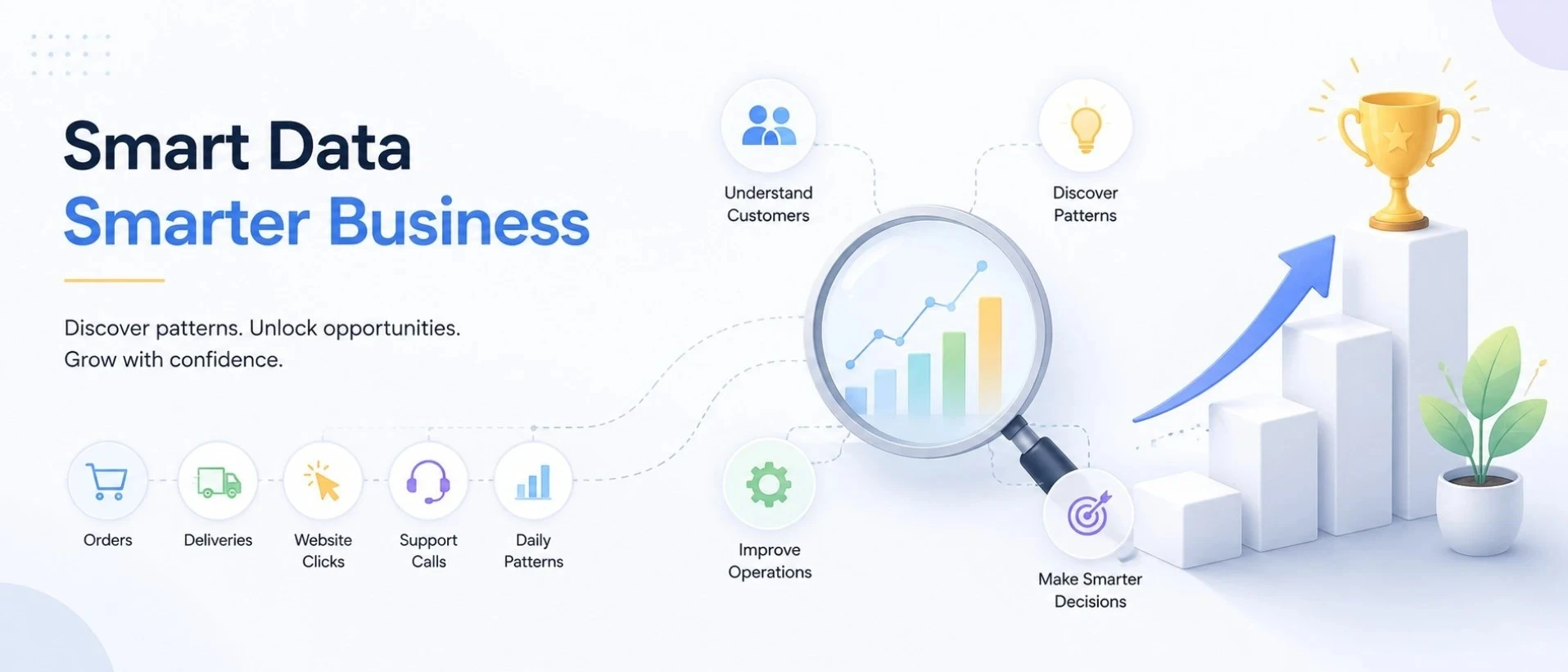
Most business opportunities do not arrive with huge warning signs. Usually, they begin as tiny patterns people ignore. A skincare company noticed something interesting while reviewing repeat purchases.Customers buying moisturizers often returned within two weeks to purchase sunscreen. At first, nobody thought much about it.
But eventually the company realized customers were slowly building skincare routines step by step. So instead of selling products separately, the brand started offering beginner skincare bundles.
Average order value increased almost immediately. The company did not create a new product. They simply understood customer behavior better.
That is what makes data exploration valuable in real business situations. It helps businesses stop guessing and start noticing what customers are already trying to tell them.
A lot of marketing still works like this: “Let’s post something and hope people respond.” Sometimes it works. Sometimes it wastes money very quickly.
Data helps businesses understand what customers actually pay attention to instead of relying completely on assumptions.
One fitness brand noticed younger audiences spent more time watching short workout videos, while older audiences engaged more with recovery tips and health-related content.
So instead of showing everyone the same campaigns, they adjusted content for different groups. Engagement improved because the content finally felt more relevant to the people seeing it.
That is one reason businesses keep asking how is data mining used in marketing. Because good marketing is not really about posting more content. It is about understanding what people actually care about.
Businesses now use customer data to understand things like:
• Which emails people actually open
• What products customers compare before buying
• Which promotions create repeat customers
• What type of content gets ignored
• Why people leave websites without converting
Once businesses understand those patterns, marketing starts feeling much less random.
Not every hidden opportunity is connected to sales. Sometimes data reveals problems businesses did not even realize were costing them money. A furniture retailer kept facing delivery complaints every winter.
The problems were attributed to traffic, weather, and holidays. However, after a closer analysis of supplier logs, the management observed that there was one supplier whose delivery was always late during winter periods.
This particular supplier slowed down the entire process. After making necessary changes to the delivery schedule earlier in the season, delivery was greatly improved.
This is one reason data mining in supply chain management has become so important. Businesses want to identify operational problems before customers start complaining publicly.
There is still this idea that data analysis only works for giant companies with expensive software and technical teams. That is not really true anymore.
In many cases, small businesses actually notice useful patterns faster because they are closer to customers. It was found that people liked heavy comfort food in cold weather and light food in hot weather.
It was seen that people who booked appointments for hair coloring came back for treatment services. A dentist discovered evening appointments filled much faster than morning slots. None of these businesses needed advanced systems to discover these patterns. They simply started paying closer attention consistently.
One of the biggest mistakes companies make is focusing only on obvious numbers like total sales or website traffic. Those numbers matter, but they rarely explain why something is happening. Sometimes the real opportunity hides inside smaller details businesses overlook every day.
Things like:
• Products customers repeatedly search for
• Services people keep asking about
• Locations where demand keeps increasing
• Complaints showing up repeatedly
• Products customers usually purchase together
Businesses that notice these details early often move much faster than competitors.
That growing focus on smarter analysis explains why the importance of data mining continues increasing across almost every industry now.
Operational problems usually repeat themselves long before businesses fully notice them.
• Late deliveries
• Supplier delays
• Stock shortages
• Warehouse bottlenecks
The warning signs are often already there. That is why many companies now rely heavily on data mining in supply chain management to identify risks earlier. One grocery distributor noticed frozen products arrived late during certain winter weeks every year.
After studying shipping records carefully, they realized weather-related transport delays followed predictable patterns. So they adjusted delivery schedules before peak winter demand started. That one decision reduced waste and prevented inventory shortages later.
Interestingly, businesses often become more customer-friendly once they understand data properly. Streaming platforms recommend shows people genuinely enjoy.
Food delivery apps remember favorite orders. Online stores suggest products customers actually need instead of random items nobody cares about. These experiences feel more personal because businesses are learning from customer behavior instead of treating everyone exactly the same way.
That is another reason people ask how is data mining used in marketing so often now. Customers expect businesses to understand them better. Not in an invasive way. Just in a useful and practical way.
Most businesses already have useful information sitting right in front of them. The real challenge is slowing down enough to notice the patterns hiding inside everyday activity. Customer habits, Repeat purchases, Delivery delays, Seasonal demand, Website behavior.
These small details often reveal opportunities businesses completely miss while focusing only on bigger goals. Data exploration is not really about complicated technology.
Most of the time, it is simply about paying closer attention to what customers and daily operations are already trying to say. And honestly, sometimes the biggest business opportunity is not something new at all. It is finally noticing what has been there the whole time.

