Retail brands have become slightly obsessed with customer behavior lately. And honestly, it makes sense. Because customers reveal a lot without saying anything directly. The products they click on. The items they ignore. The things they add to cart and never buy. The pages they visit three times before finally purchasing.
All of it tells a story. A few years ago, retailers mostly depended on experience, trends, and assumptions to make decisions. Now they have access to something much more useful - real customer behavior. And the brands using that information properly are usually the ones growing faster.
Shopping habits have changed completely. Customers move fast now. They compare products while watching Netflix. They open five tabs before buying one item. They leave websites within seconds if something feels confusing or slow.
And honestly, customers have become difficult to hold onto. That is why retailers are trying to understand what customers actually want instead of guessing.
They want answers to simple questions:
• Why are customers leaving without buying?
• What products are people interested in right now?
• Which offers make customers come back?
• Why do some products suddenly become popular overnight?
Because once businesses understand these patterns, decisions become easier. That is also why data mining services have become so common in retail. Businesses already have tons of customer data. The real challenge is figuring out what is actually useful.
The smartest retailers are not just collecting data anymore. They are using it to quietly improve the shopping experience in ways customers notice without realizing it.
You have definitely seen this before. You search for one thing online… and suddenly the website starts showing products that are weirdly relevant. Sometimes a little too relevant. But there is a reason those recommendations work. Retailers study what customers search for, what they buy, how long they browse, and what products are usually purchased together.
For example, someone buying running shoes will probably end up looking at sportswear, gym accessories, or fitness watches later. Retailers use data mining techniques to connect those patterns. And honestly, customers usually like this when it feels helpful instead of random. Nobody wants to spend 20 minutes searching for something the platform could have shown immediately.
Inventory problems are expensive. Too much stock means products sit in storage collecting dust. Too little stock means customers leave because the product disappeared right when they wanted it. Retailers now study customer behavior to avoid both situations.
They monitor:
• Sudden weekend buying surges
• Peak times during festivals
• Changes in the weather
• Seasonal buying patterns
• Regional tastes
• Social proof notifications
For instance, when umbrella searches go up because there’s heavy rain forecasted, retailers can prepare themselves for the sudden surge in demand.
Same thing during festivals or major sports events. This is one of the biggest practical benefits of data mining because businesses stop relying only on guesses. And customers remember brands that actually have products available when needed.
Pricing is surprisingly emotional. Sometimes customers love a product but still leave because the final price feels slightly uncomfortable. Retailers watch this behavior closely now.
If customers keep abandoning carts at the same point, businesses start testing different things:
• Small discounts
• Free delivery
• Product bundles
• Limited-time offers
And honestly, even tiny pricing changes can massively affect sales.
Retailers also monitor competitor pricing constantly because customers compare everything now. Nobody buys blindly anymore.
One thing retailers learned very quickly: Not all customers behave the same way. Some customers wait for discounts. Some buy instantly. Some only shop during festivals. Some care more about premium quality than price. Retailers then classify their consumers into smaller segments according to their shopping behaviors.
For instance:
• Repeat customers may be motivated by reward programs
• Cost-conscious consumers will always be motivated by discount offers
• Premium consumers may prefer exclusivity
• Seasonal shoppers are activated during promotional periods
This helps firms avoid sending out random marketing messages to all consumers. Because honestly, people ignore most marketing now unless it actually feels relevant.
Many companies combine segmentation with data mining methods and techniques to make campaigns feel more personal. And when customers feel understood, they are more likely to return.
Cart abandonment hurts every online retailer. Customers add products to their cart… and then disappear.
Sometimes shipping costs annoy them. Sometimes checkout feels too long. Sometimes they simply get distracted and forget. Retailers study these patterns carefully because recovering even a small percentage of abandoned carts can increase revenue a lot.
That is why businesses send:
• Reminder emails
• Discount offers
• Restock alerts
• Faster checkout options
Most people have experienced this personally. You leave a product in your cart and suddenly receive an email a few hours later saying:
“Still thinking about it?” That is customer behavior data quietly doing its job.
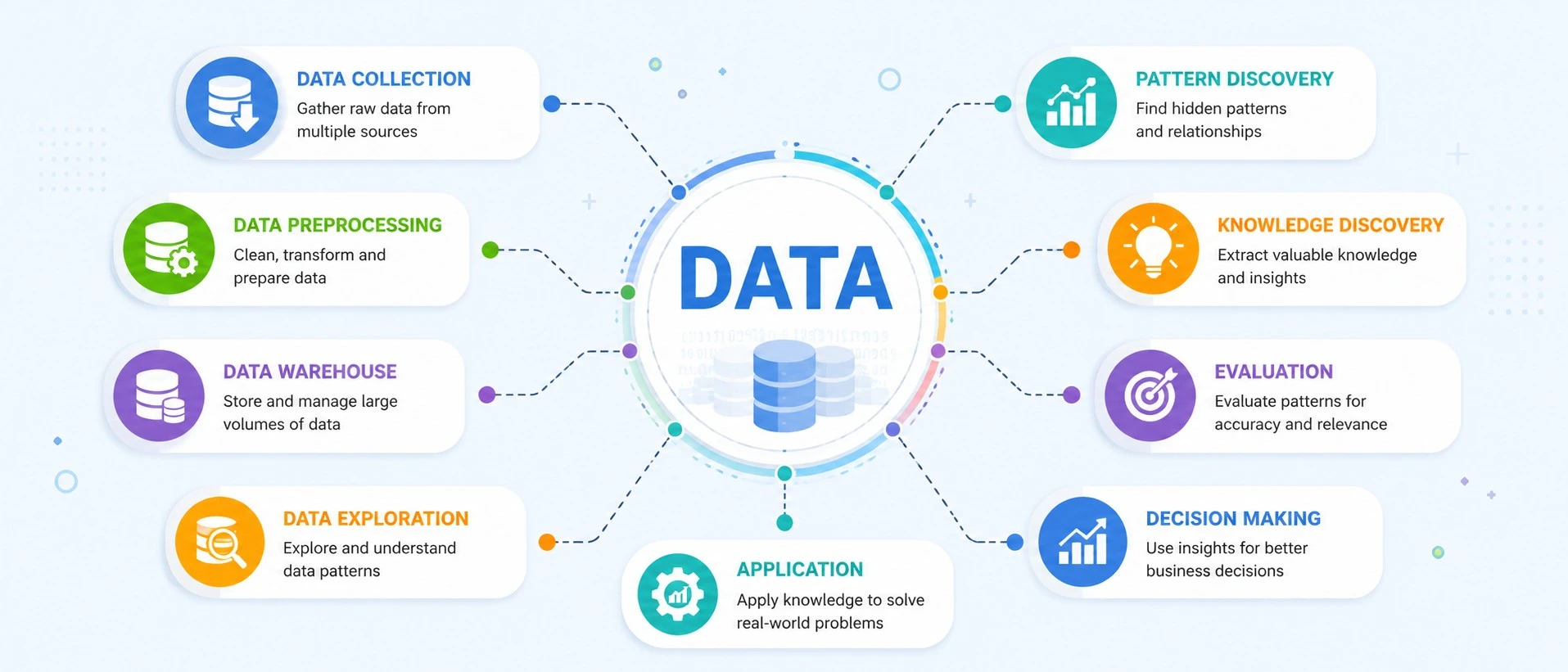
Retail businesses use different data mining methods and techniques to understand customer behavior better.
The following are some of the most popular ones:
Classification analysis
Groups customers depending on their shopping behavior and purchasing patterns.
Association rule learning
Identifies products that are commonly purchased by customers.
Clustering
Segments customers for personalized marketing strategies.
Regression analysis
Aids in predicting future trends in sales.
Anomaly detection
Identifies any suspicious activity or potential fraud.
Predictive analysis
Predicts future customer behavior using previous data.
These data mining services enable the retailer to make sound decisions regarding inventory, marketing, pricing, and customer segmentation.
This is not only applicable to online shopping but physical stores also utilize customer behavior data.
Retailers study:
• Which areas customers visit most
• Which products sell together
• What time stores become busiest
• How shoppers move around inside stores
That is why related products are often placed close together. Or why seasonal products suddenly appear right near the entrance. These small layout decisions quietly influence buying behavior every day.
Retailers do not want to wait for trends anymore. They want to spot them early. So businesses now study product searches, repeat visits, customer engagement, and shopping activity to identify rising demand before competitors notice it. For example, if a product category suddenly starts getting more searches, retailers may increase inventory immediately before demand peaks
That early preparation often creates a huge advantage. Many companies investing in data mining services focus heavily on predictive insights for exactly this reason.
This is no longer something only giant companies can afford. Smaller retailers now have access to affordable tools that help them understand customer behavior too.
They can track:
• Buying habits
• Product performance
• Repeat purchases
• Inventory trends
Which means smaller businesses can compete much more effectively than before.
The growing accessibility of data mining methods and techniques has made customer analytics available to almost everyone now.
Even with all these advantages, retailers still face problems while managing customer data.
Data Privacy and Trust
Customers care much more about privacy now. And honestly, they should. Retailers must protect customer information carefully because once trust breaks, it becomes very difficult to rebuild.
Managing Large Amounts of Information
Some businesses collect huge amounts of data but still struggle to figure out what actually matters. Too much information without clear direction can create confusion instead of helping.
Maintaining Accurate Data
Bad data creates bad decisions. If customer information is outdated or incomplete, even advanced analytics systems become unreliable.
Retail is becoming more customer-focused every year. Businesses no longer want to know only what customers buy.
They want to know:
• Why they buy
• When they buy
• What makes them leave
• What makes them return
AI and predictive analytics are making this easier than ever. And many companies exploring the advantages of data mining are realizing that even small customer insights can improve sales, retention, and marketing performance.
Retail today is no longer just about products. It is about understanding people. The brands growing fastest are usually the ones paying attention to customer behavior instead of relying only on assumptions. Retailers using modern data mining techniques are not just collecting information anymore.
They are using customer behavior to make smarter decisions every single day. And honestly, businesses that truly understand their customers will always have an advantage over the ones that do not.

