Quick Overview
Find out how to check if your brand appears in AI-generated answers, track mentions and citations, compare competitors, and improve visibility with a repeatable monthly process.
Open in AI tools
Use these links to get a faster AI-generated summary of this article.
You track visibility in AI search by checking whether your brand shows up inside the answers AI tools write, since there is no rank position to look at. Teams that offer AI SEO services usually do this with a fixed list of test questions, a simple sheet, and a monthly check. You ask the same questions in tools such as ChatGPT or Perplexity. Then you note whether your brand was named, linked or left out. That record tells you more than a rank tracker can.
This matters because AI search doesn't work like a results page. A page can rank well and never get mentioned in an answer. It can also get mentioned while sitting far down the results. This post shows you how to measure both cases and what to do with what you find.
Why Rank Tracking Misses AI Search
A rank tracker reports one thing, which is where a page sits on a results list. AI answers have no list like that. The tool writes a short reply and sometimes names a few sources. Your page could rank third on Google and never appear in that reply.
The opposite can happen too. A page on the second results page might get quoted because it explains the topic more clearly than the pages above it. If you only watch rankings you'll miss this. You'll also miss the moments when a competitor gets named and you don't.
The Visibility Signals That Matter Most for Your Website
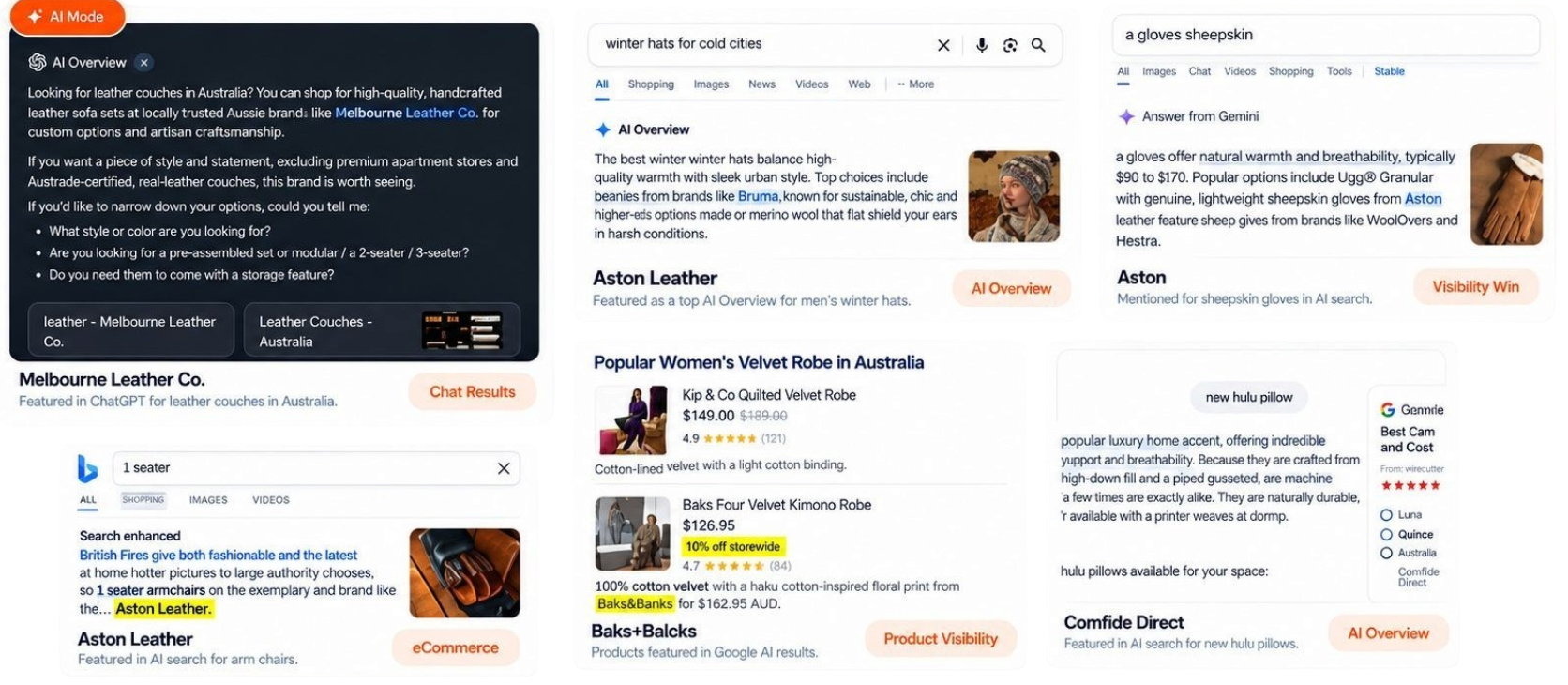
AI search visibility isn't one number. It shows up in three ways, and each one tells you something different. Here are the 3 visibility signals that matter most for your website :
• Mentions : A mention means the tool names your brand in its answer, even without a link. It shows that the tool connects your name with the topic.
• Citations : A citation means the tool links to your page as a source. This is the strongest signal because it can send real visitors to your site.
• Order in the Answer : Being named first in a list of five is not the same as being named last. Note the position each time so you can spot small gains.
Create a List of Questions Your Customers Ask
Start by making a list of 20 to 30 questions your customers may ask. You can find these questions in sales calls, customer emails, and Google Search Console. Use simple, natural words that people normally type when searching online.
Include three types of questions. The first type covers general topics, such as what AI search engine optimization means. The second compares different options, such as hiring an agency or a freelancer. The third focuses on buying, such as finding SEO services for small online stores. These questions help you understand what customers need at each stage of their buying journey.
For example, a small furniture store can track 25 customer questions. In the first month, it may find its name in only a few answers to general questions. This shows that the store needs more content to help customers compare services and make buying decisions.
Set Up a Simple Tracking Sheet
You don't need special software to begin. A spreadsheet works fine. Follow these steps:
One detail matters a lot here. AI answers change from one run to the next. Ask each question two or three times and look at the pattern instead of a single result. If your brand appears in two of three runs, that is a solid sign.
Compare Manual Checks, Paid Tools, and Analytics
Manual checks are free and show you exactly what a real person sees. They get slow after about 50 questions. Paid tracking tools can run hundreds of questions on a schedule. They cost money, and their results may differ a little from what you see by hand.
Analytics adds a third view. In Google Analytics you can check referral traffic from AI tools like chatgpt.com and perplexity.ai. For many sites this traffic is still small, so don't judge success by clicks alone. Growth in branded searches in Search Console is another useful hint.
Traditional seo services often stop at rankings and clicks. Adding these three checks gives you a fuller picture of how people find you.
Read the Results and Fix the Gaps
When a competitor is named and you aren't, open the pages the AI tool cites. Look at how they're built. Most give a plain answer near the top and show an author name and a recent date. Many also include a comparison table or a short list. Then check your own page for the same things. Rewrite the opening so it answers the question in two or three sentences. Add author details and update old dates. Also look at which outside sites the tools cite, such as review sites and industry blogs, and try to get listed there.
Recheck after four to six weeks using the same questions. Nothing here is guaranteed, and results will vary by topic. The sheet just helps you see whether your changes are working.
Mistakes That Make the Data Useless
A few habits can ruin an otherwise good tracking setup:
The last one deserves extra attention. If a tool gives out an old address or a wrong service list, find the source it is likely pulling from and fix it there.
Final Thoughts
Measuring what doesn't rank comes down to asking the right questions and writing down the answers on a schedule. Over a few months the sheet shows where you're strong and where competitors are winning. That makes your next content decision much easier.
If you'd like help setting this up, Gtechwebindia offers ai seo services along with practical AI search engine optimization support and regular SEO services. You can see what they do at gtechwebindia.com.
Frequently Asked Questions
1. What are AI SEO services?
They are services that help your brand get named and cited in answers from tools such as ChatGPT and Gemini. They usually cover content changes, tracking, and technical checks.
2. How is AI search engine optimization different from regular SEO?
Regular SEO aims for a high position on a results page. AI search optimization aims to get you included in the written answer. The two overlap, since clear and useful pages help in both.
3. How often should I check my AI visibility?
Once a month is enough for most sites. Checking every day adds noise because answers change from run to run.
4. Can a small business track this without paid tools?
Yes. A spreadsheet and 20 to 30 questions are enough to start.


 ChatGPT
 Google AI
 Perplexity
 Claude
 Grok
Grok